

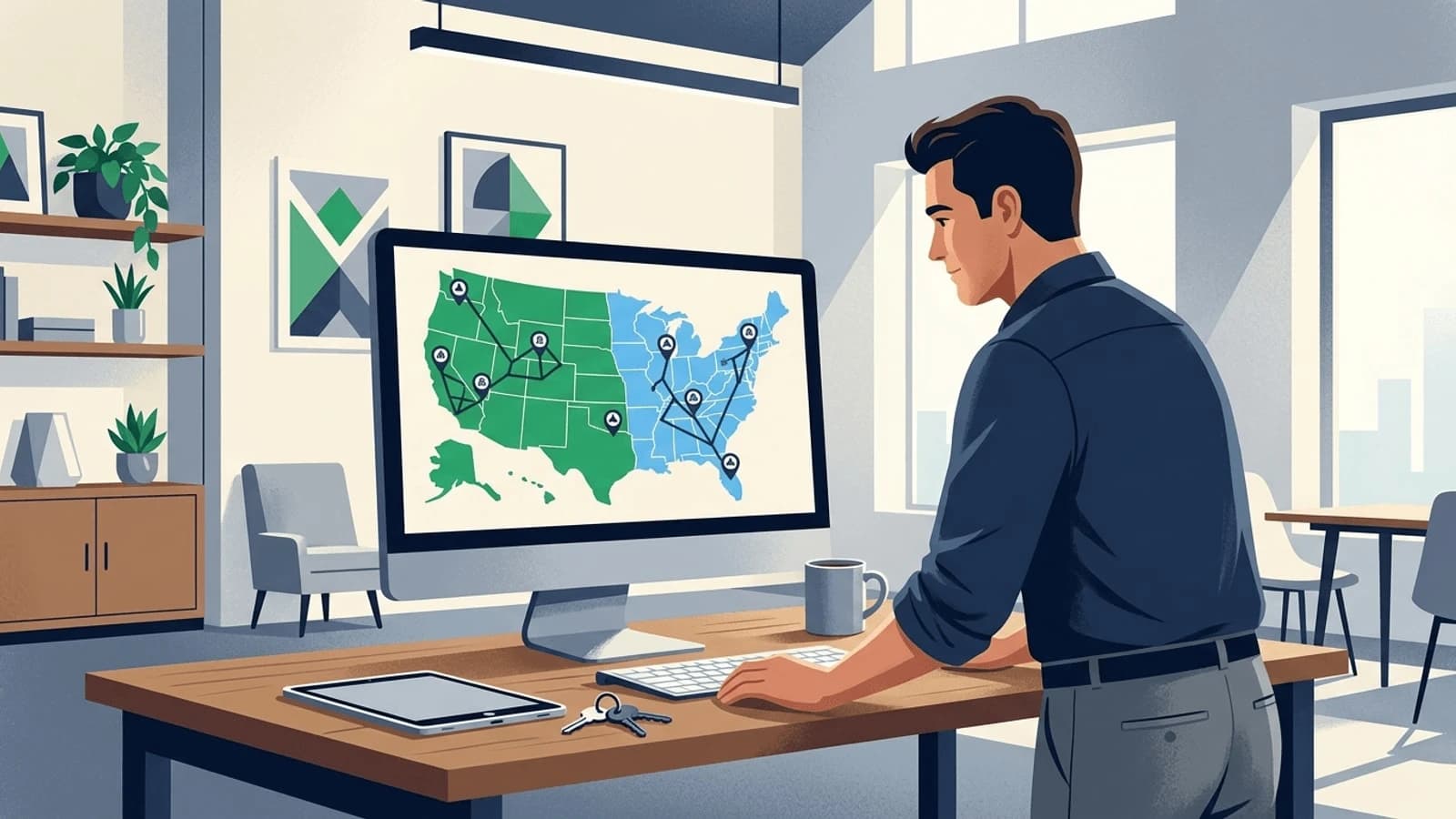
The hidden cost of windshield time on contractor profitability
Non-billable drive time—commonly known as windshield time—is the single largest operational leak in residential and commercial plumbing businesses. When a service truck spends an hour and fifteen minutes crawling through highway traffic between calls, that hour represents zero billable revenue while consuming technician wages, fuel, vehicle wear, and vehicle insurance.
Consider a two-truck plumbing company where each technician averages three calls per day. If poor routing introduces an extra thirty minutes of transit per call, each technician loses ninety minutes of productive wrench time daily. Over a full working year, that equates to roughly 750 lost billable hours—representing more than $110,000 in lost gross margin per year across two trucks.
Contractors often think expanding their service territory to a thirty-mile radius will grow their business. In reality, stretching dispatch boundaries without route density destroys customer responsiveness, inflates fuel costs, and burns out service technicians.
Drive-time isochrones vs. arbitrary radial mileage zones
The most common territory planning mistake is drawing a 15-mile or 20-mile circular radius around your central shop. Circular radius mapping ignores natural bottlenecks such as rivers, drawbridges, mountain passes, congested tollways, and railway crossings. A customer five miles away across a choked metropolitan bridge can take longer to reach than a customer twelve miles away along a free-flowing suburban bypass.
Modern plumbing dispatch logistics relies on drive-time isochrones: polygon boundaries that represent equal travel duration during peak traffic hours. Building your core service territories around 15-minute, 30-minute, and 45-minute drive-time polygons allows you to price dispatch fees accurately and maintain guaranteed arrival windows.
| Territory Zone | Drive-Time Window | Dispatch Fee / Call-out Policy | Service Strategy & Scheduling Priority |
|---|---|---|---|
| Zone 1: Core Primary | 0 to 15 minutes from shop/depot | Standard dispatch fee ($49-$79), waived with completed repair | High-density same-day priority. Maximum marketing ad spend and fastest emergency dispatch. |
| Zone 2: Secondary Ring | 16 to 30 minutes from shop/depot | Standard dispatch fee ($89-$119) | Batch appointments by neighborhood on designated days (e.g., North corridor on Tuesdays and Thursdays). |
| Zone 3: Extended / Rural | 31 to 45 minutes from shop/depot | Premium travel surcharge ($149+), non-refundable | Scheduled only for high-ticket major installations (whole-house repipes, sewer replacements, boiler installs). |
| Out-of-Bounds (> 45 min) | Over 45 minutes from shop/depot | Referred to local network contractors | Refuse routine service calls. Accepting isolated calls here dilutes core territory capacity. |
Batching routine maintenance around high-density plumbing neighborhoods
The key to high route density is cluster scheduling. Rather than crisscrossing town chasing single calls, customer service representatives (CSRs) should actively guide callers into neighborhood scheduling batches.
When a customer in your eastern corridor calls for a routine water heater flush or whole-home plumbing inspection, offer them priority dispatch on the day your truck is already scheduled in that subdivision. Informing the customer that 'Our senior technician Sarah will already be in your neighborhood on Thursday morning between 9 AM and 11 AM' creates an impression of high local demand while eliminating forty minutes of cross-town driving.
Pair this with targeted local door-hangers, direct mailers, and yard signs on homes where you have active repiping or sewer replacement permits. Winning three homes on the same street creates effortless route density.
Structuring profitable 24/7 emergency dispatch perimeters
Emergency 24/7 service is highly profitable, but running calls at 2:00 AM across a 30-mile radius is dangerous and unsustainable for on-call plumbers. Restrict after-hours emergency service strictly to Zone 1 (0 to 15 minutes) or require mandatory upfront dispatch authorization with verified credit card holds.
Clearly distinguish between true emergencies (uncontrollable main line flooding, burst frozen pipes, lack of domestic water to commercial care facilities) and routine issues that can safely wait until 8:00 AM (slow lavatory drains, dripping outdoor spigots, running toilet flappers). Triage callers over the phone and teach them how to isolate shutoff valves safely using our emergency plumbing leak guide.
Leveraging your PlumberPick profile to capture local search density
To dominate specific high-margin neighborhoods, your online footprint must reflect the exact cities and zip codes you want to serve. Generic directory listings that claim to serve entire states attract low-intent, long-distance leads that waste dispatch time.
On PlumberPick, configure your service radius to match your verified Zone 1 and Zone 2 drive-time isochrones. Showcase completed project photographs tagged to those specific communities, highlight your state master licensing credentials, and gather reviews from clients in those neighborhoods. Concentrating your reputation where your trucks already drive builds unbeatable local market dominance.